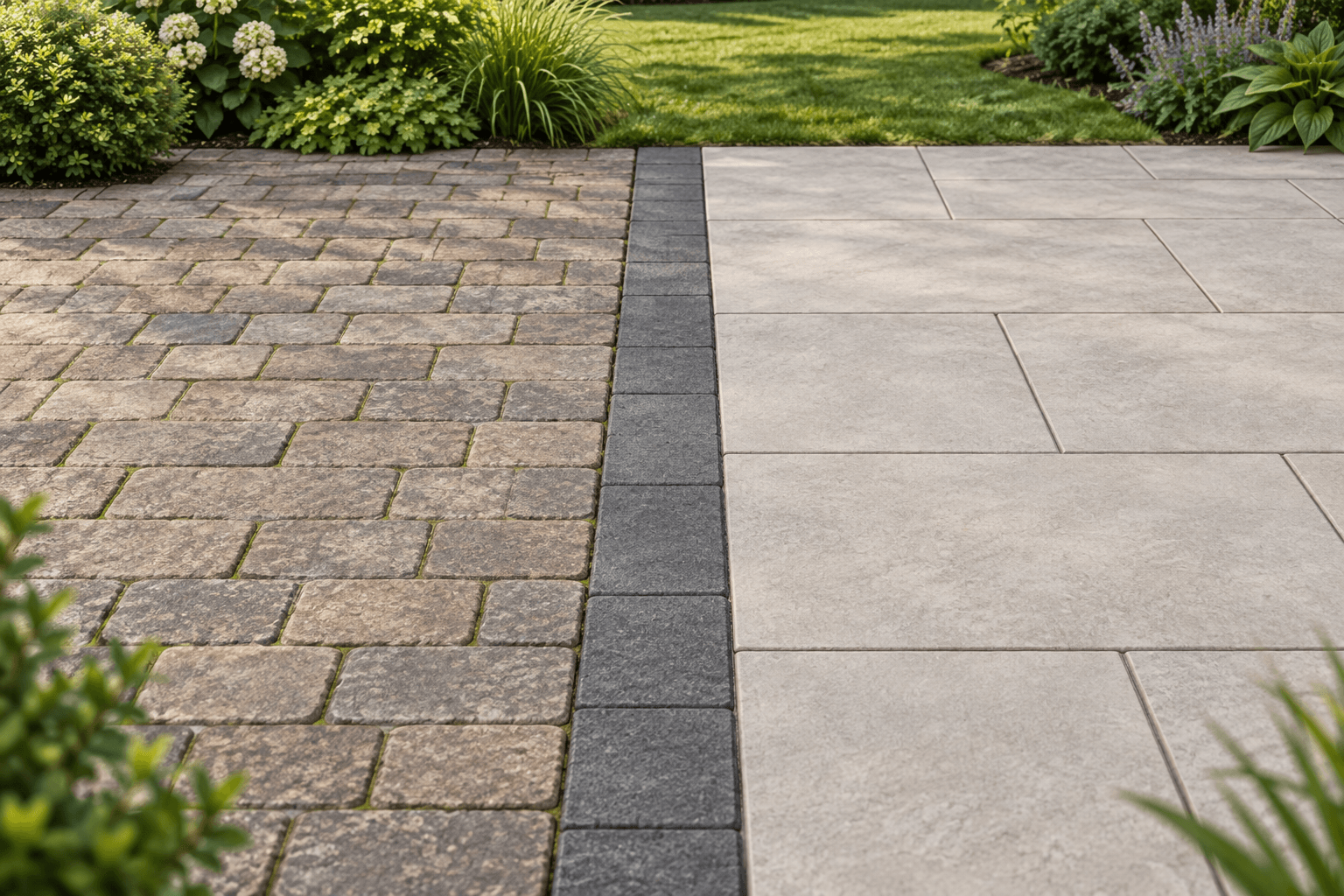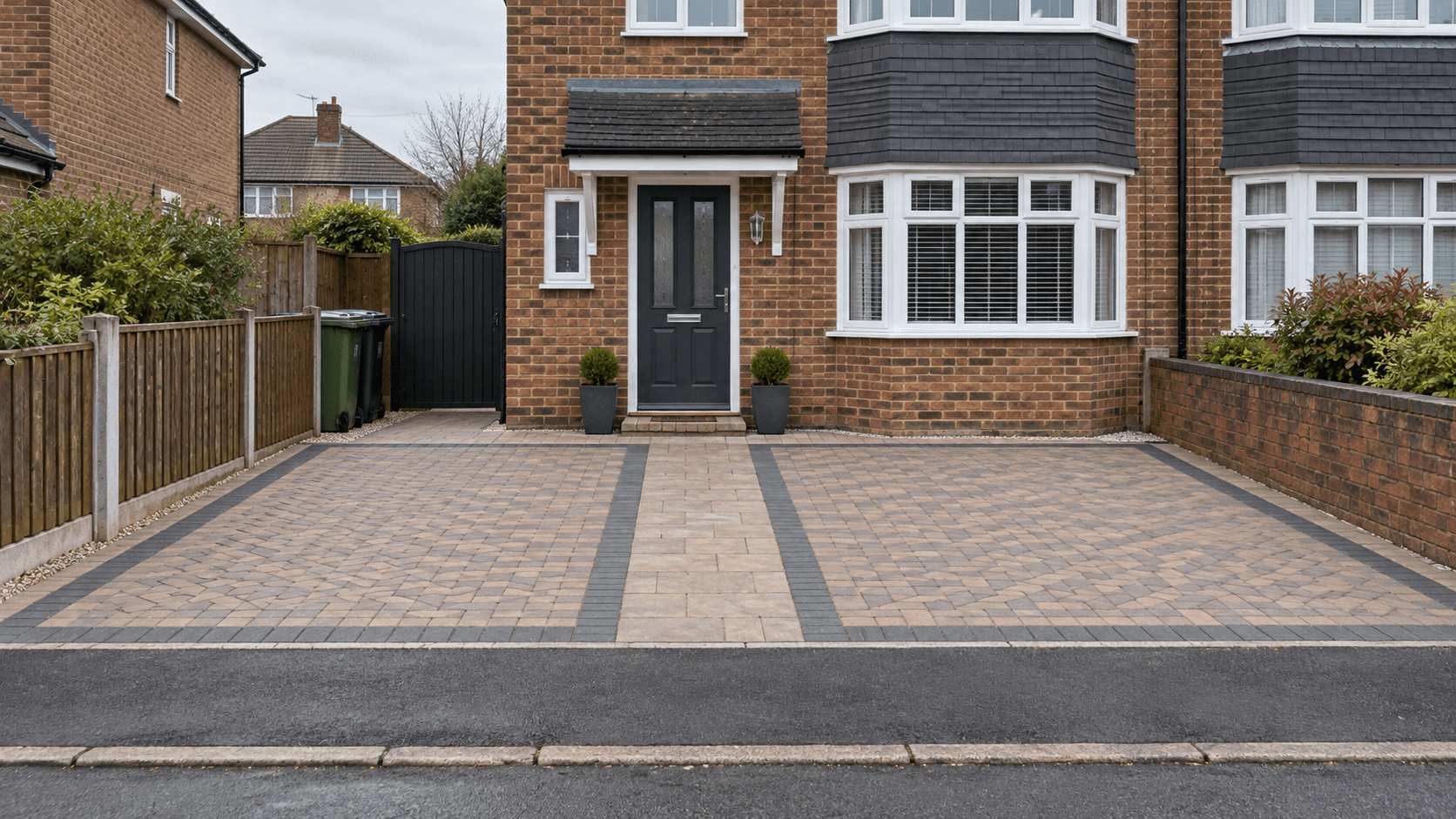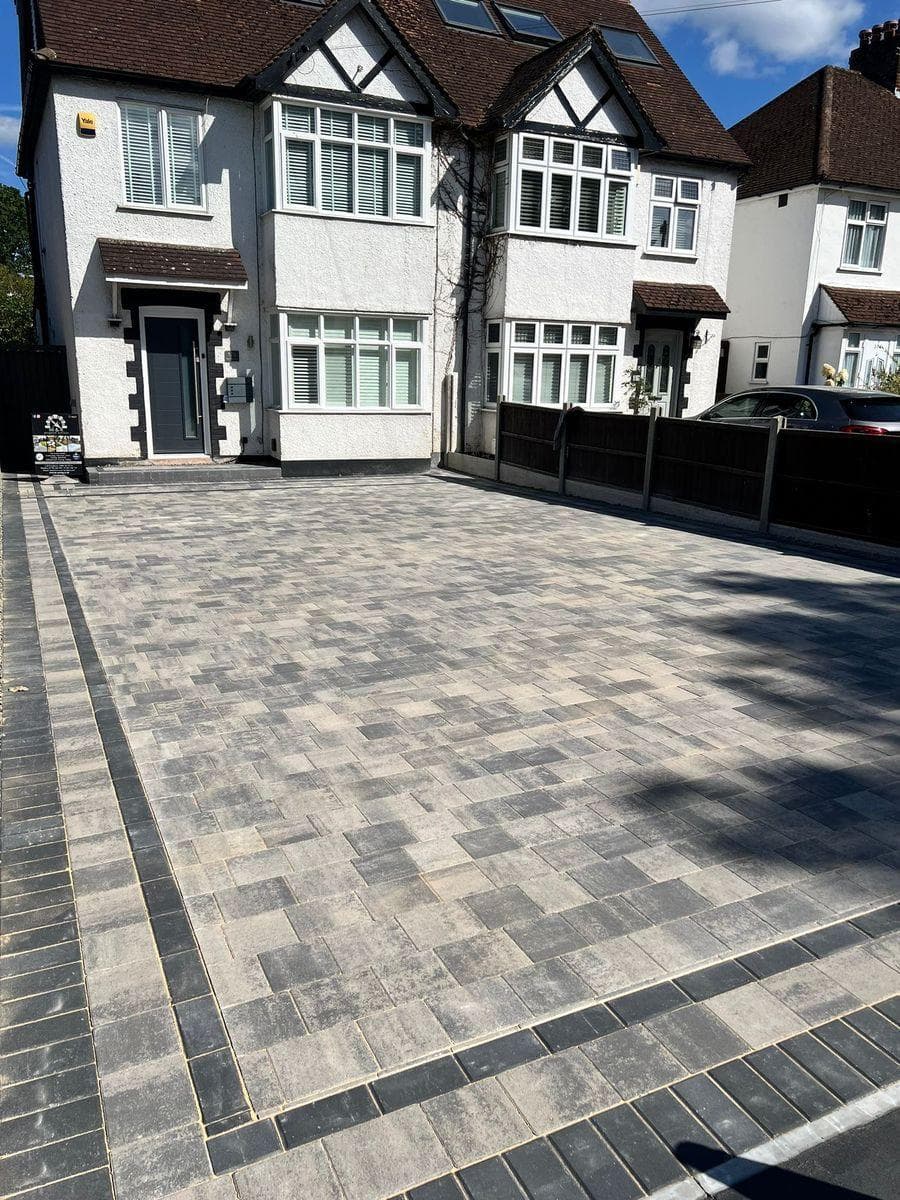
Driveways rarely fail in the middle. They fail at the edges and the turning points: the corner every wheel clips on the way out, the boundary line where blocks lean into the flower bed, the junction with the public footway that takes a bump twice a day. Watch where a tired drive is worst and you are looking at its edges.
M&R Property & Paving Services lays block paving in Bedfont and builds the edges as the main structural event they are. This is why they matter and what doing them properly involves.
Why edges carry the whole surface
Block paving works by interlock: each block braces its neighbours, and the whole surface pushes gently outward under load. The edge course is what pushes back. If the perimeter is weak, the surface spreads a few millimetres a year, joints open, sand escapes, and the middle eventually follows the edges into looseness.
That is why the invisible part of an edge matters more than the visible one. A proper edge course is bedded on concrete and haunched, meaning concrete shoulders support it from behind, below the finished surface where nobody ever sees it. An edge block simply butted against soil is a decoration waiting for the first winter.
- Edges restrain the interlock that makes block paving work.
- Haunched concrete behind the edge is the real structure.
- Weak edges show up later as open joints everywhere.
The corners wheels actually use
Cars do not use a driveway evenly. They cut the same entry corner, brake at the same spot, and swing the same arc to line up with the gate or garage. Those repeat paths deserve design attention: herringbone interlock through the turning zone, and edges at the entry corner built to take a clipped wheel without shrugging.
M&R Property & Paving Services walks this with customers at survey: where do you actually swing in, where do visitors park, does a trailer or van ever come in? Ten minutes of honesty about real use decides where the reinforcement belongs, and it costs nothing to put strength where the wheels will be.
- Identify the real entry swing and brake points at survey.
- Herringbone through the trafficked arc.
- Extra edge strength at the corner every wheel clips.
Where the drive meets the road
The threshold with the public footway is the hardest-working line on the frontage. It takes the drop from every crossing vehicle, it is where the council's surface meets yours, and it is the natural place for a kerb or transition detail that manages the level change without a jolt.
It is also where water wants to leave your drive and visit the pavement. A correctly built threshold keeps runoff inside the plot with a channel or permeable margin before the boundary, which is both neighbourly and what the front-garden drainage expectations ask for.
Reading the edges on an existing drive
An honest five-minute inspection tells you most of what is coming. Look along each edge at a shallow angle: a straight line is health, a gentle bow outward is the surface spreading. Press the outermost blocks with a foot; movement means the haunching has failed or never existed. Open joints concentrated near the perimeter are the same story told in sand.
Caught early, edge repair is contained: lift the perimeter runs, rebuild the concrete restraint, relay the same blocks. Ignored, the spread works inward until relaying the whole surface is the only honest quote. Edges are the cheapest place on a drive to be early and the dearest place to be late.
Related pages
Questions customers ask
Why are the blocks at the edge of my drive coming loose?
Because the edge restraint behind them has failed or was never built. Blocks lean outward, joints open and the looseness spreads inward. Rebuilding the perimeter properly usually rescues the rest.
What should the edge of a block paved drive sit on?
A concrete bed with haunching behind it, below the visible surface. The edge course is a structural retaining line first and a border second.
Can just the edges of a driveway be repaired?
Yes, if the field is still sound. The perimeter lifts, the restraint is rebuilt and the original blocks relay invisibly, which is one of block paving's genuine advantages.
Judge any block paving quote by its edges: what is under them, what is behind them, and what happens at the road. The surface everyone photographs is resting on the line almost nobody prices properly.
M&R Property & Paving Services can inspect a spreading edge in Bedfont or build a new drive with the perimeter done right the first time. The contact page is the quickest start.