Almost no fence fails in the middle of a panel. It fails at the post, and it usually fails at the point where the post meets the ground. That single fact should shape how a fence is specified, because the timber everyone looks at in the showroom is the part least likely to decide how long the run lasts.
M&R Property & Paving Services installs garden fences alongside decking, garden pathways and block paving. The notes below cover the decisions that actually matter before a quote is worth comparing.
The post decides the lifespan
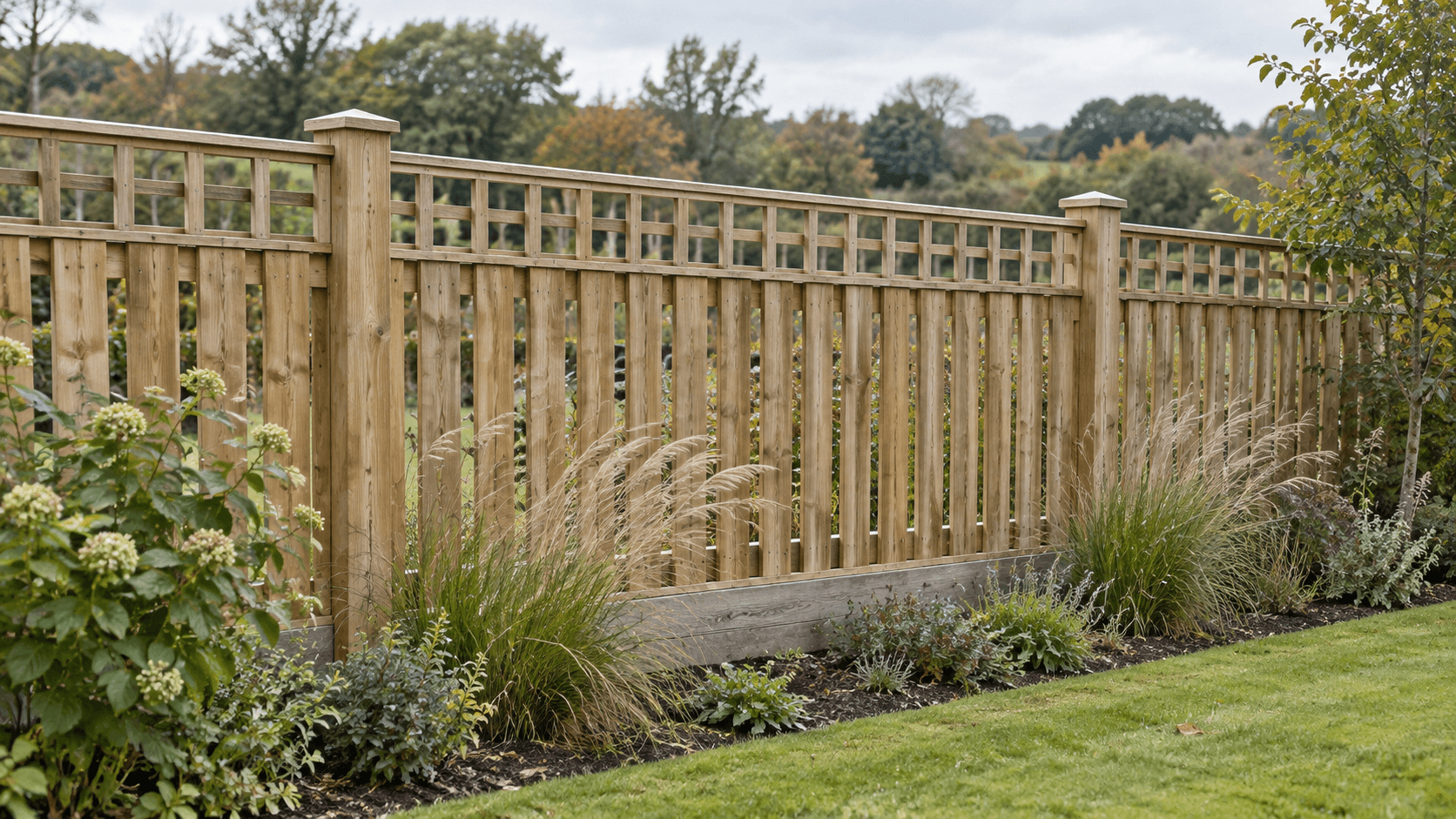
Timber posts rot at the ground line, where wet soil, air and bacteria all meet. Concrete posts avoid that entirely but read as heavier and less warm, and they are unforgiving if a level changes later. Timber set into a concrete collar that is dished away from the post so water runs off will outlast timber sunk into a hole that fills up like a bucket. Metal post spikes are quick and are fine for a light run, but they offer far less resistance in exposed positions.
Depth is the other half of it. A general rule for a domestic run is that roughly a quarter to a third of the post sits below ground, and taller fences need proportionally more. Skimping here is invisible on the day and obvious after the first serious wind.
- whether posts will be timber, concrete or timber in metal shoes
- the finished height you actually want, measured from your side
- whether gravel boards will keep panel timber off the soil
- how exposed the run is, and which way the prevailing wind hits it
- the number of panels and any change in ground level along the run
Settle the boundary before anyone digs
This is the part that causes disputes, and it is worth an hour of paperwork. Check your title plan to see where the boundary is understood to run, and look for any marking that indicates which side is responsible for maintaining it. A common assumption that the left-hand fence is always yours has no general basis in law.
Two practical points follow. If the fence is genuinely yours, you can replace it, but you cannot go onto a neighbour's land to do so without their agreement, which affects how the job has to be worked. If it is shared or theirs, a conversation before the quote is far cheaper than one after the posts are concreted in. Either way, agreeing the height and the finished appearance in advance avoids the most common source of bad feeling.
Ground conditions and drainage in Egham
Ground makes a real difference to how a fence is built. Heavy clay holds water around a post and moves seasonally as it shrinks and swells; free-draining gravel is kinder to timber but gives less grip, so post holes need to be sized accordingly. A run along the bottom of a slope, or across a spot where surface water collects after heavy rain, will need drainage thought about rather than ignored.
Existing obstacles matter too. Tree roots, a buried run of old hardcore, a services route or a neighbouring wall will all change where a post can physically go, and sometimes change the panel spacing along the whole run. Any of these are better found at the quoting stage than halfway through the work.
- clear access along both sides of the line if possible
- cut back planting growing through the existing fence
- note where surface water sits after heavy rain
- flag any known services or drain runs near the line
- decide in advance who removes and disposes of the old fence
Questions customers ask
Which side of the fence am I responsible for?
There is no universal rule, despite how often one gets repeated. Responsibility comes from the deeds and the title plan for the individual property, and sometimes it is genuinely shared or unrecorded. Check the plan first, and where it is unclear, agree the position with the neighbour in writing before work starts. That agreement is worth more than any convention about which side the posts face.
What should I have ready before asking for a fencing quote?
The length of the run, the height you want, the number of panels if you already know it, a photograph of what is there now, and a note of the access route to the back garden. Say whether the old fence needs taking away, because disposal is a real cost rather than an afterthought. If the ground is sloped or waterlogged, mention it early; it changes the specification rather than just the price.
Before you ask anyone to price the work, walk the line with a tape measure, note the height you want from your own side, photograph the existing fence and check your title plan for the boundary.
M&R Property & Paving Services covers garden fences in Egham, along with decking, garden pathways, block paving, natural stone paving, resin bound gravel, tarmac and pattern concrete.
Call 0800 107 8714 with the length, the height and a photograph, and you will get a quote that separates posts, panels, gravel boards and disposal instead of a single figure per metre.