A garden path is easier to get right when you start from how the garden is actually used rather than from a paving sample. Where people walk, where bins and bikes pass, and which route turns awkward when chairs or planting are in the way all matter more than the colour of the finished surface.
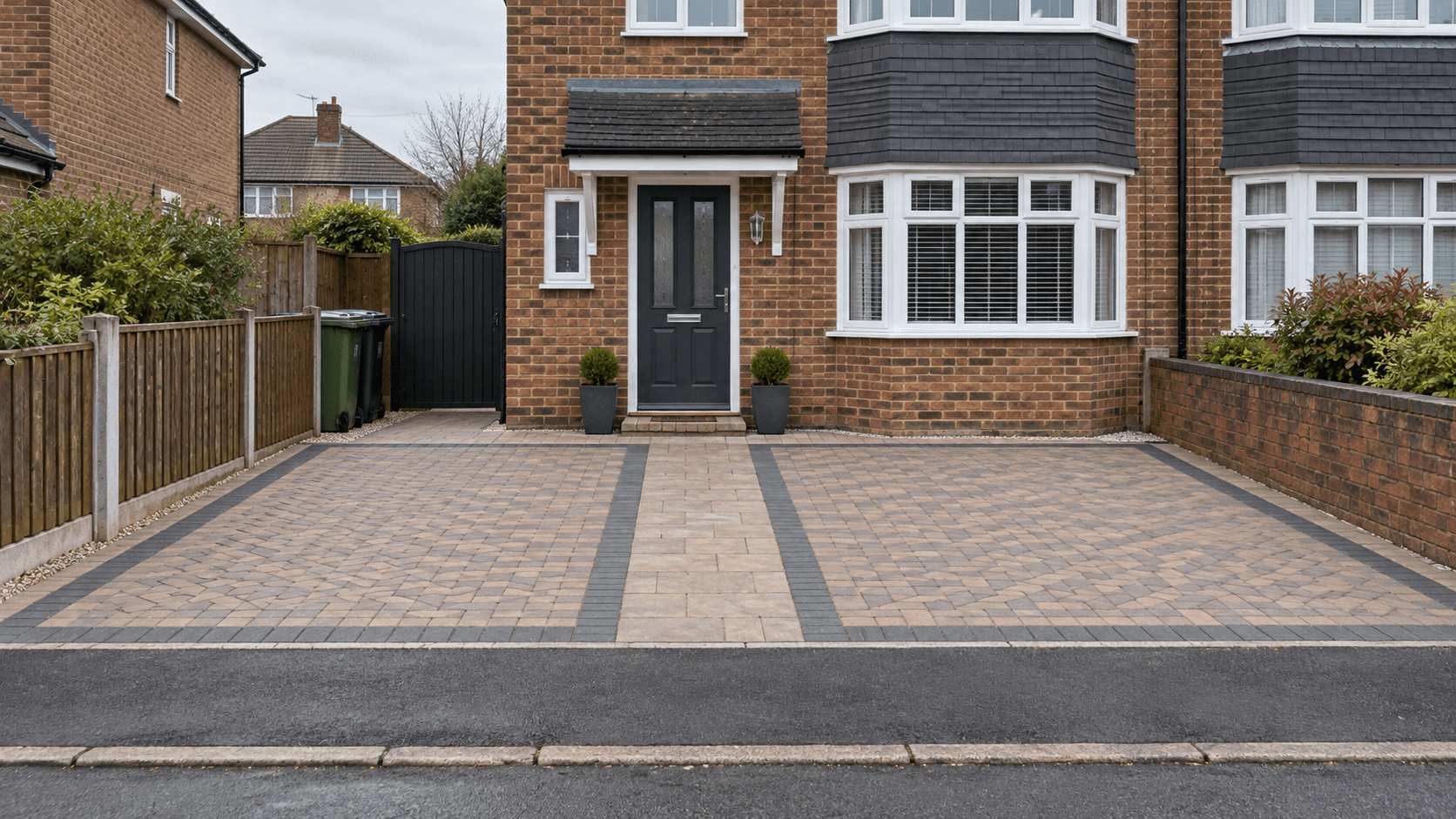
M&R Property & Paving Services lists garden pathways among its Staines services, alongside block paving, natural stone, resin-bound material and pattern concrete, with paths tied into drives, patios and rear garden features. That range makes the first decision the route and its purpose, not the colour of the surface.
No two gardens want the same garden pathways. Staines plots vary in width, access and levels, so the route deserves as much thought as the material.
Start with destinations, not paving samples
Walk the garden as it is used on an ordinary week. Begin at the doors, gate, driveway and patio, then add the practical destinations: bins, storage, washing line, seating. A direct line suits a frequently used route; a gentler line can work where the path runs through planting.
Outline the proposed edges with a hose, string or removable markers, then walk it carrying something typical - a bin, a watering can, a garden chair. That exposes tight turns and pinch points without disturbing the ground, and it shows whether a gate opens across the route or a step lands awkwardly.
Choose the surface after defining the job
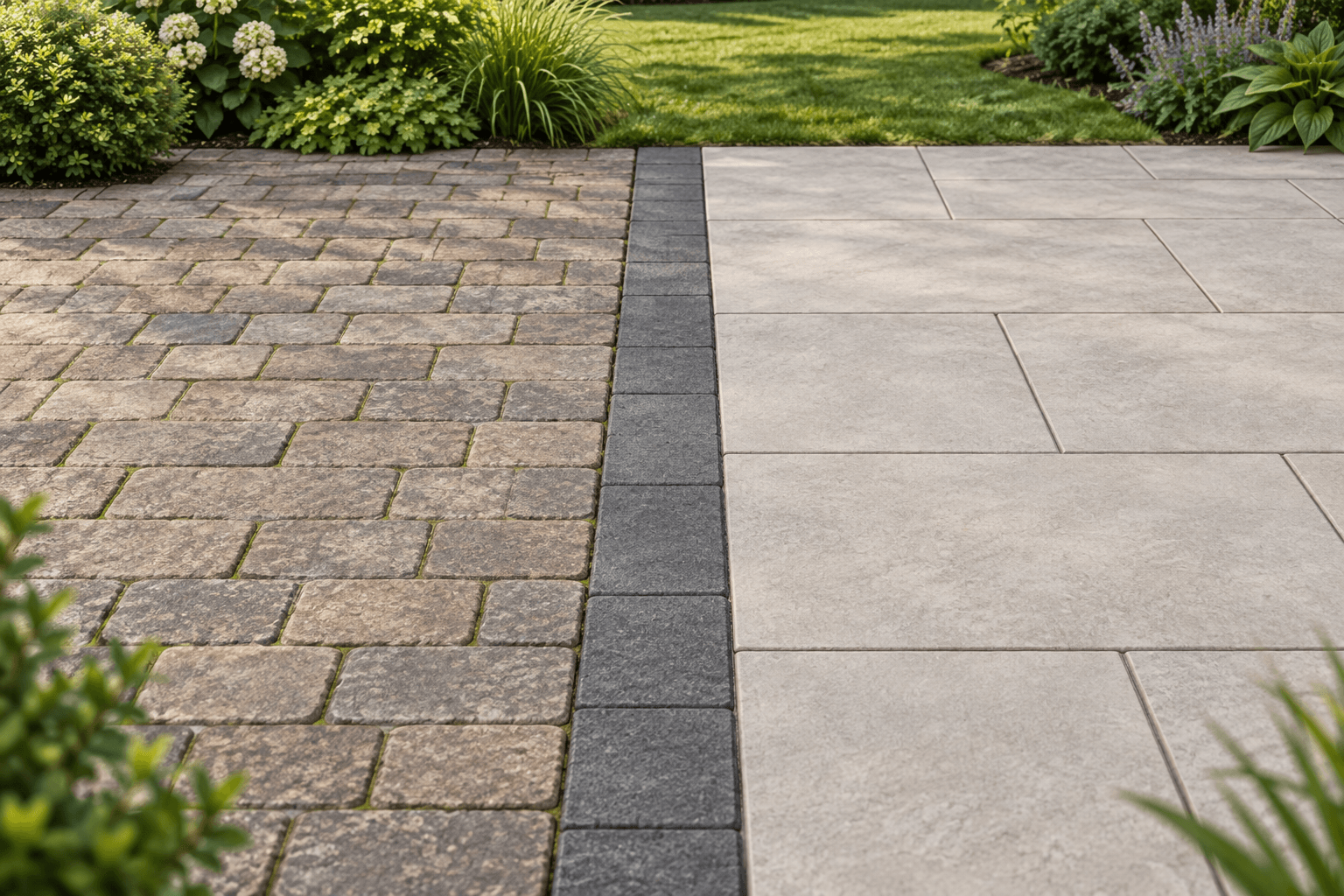
Each pathway material creates a different relationship with the property. Block paving can echo an existing drive. Natural stone can relate a route to a stone patio. Resin-bound material gives a continuous surface without loose gravel. Pattern concrete and flags read as a clearly jointed path.
Compare options against the same questions rather than choosing from one small sample:
- Will the path meet an existing driveway, patio or step, and how should that junction look?
- Is the route mainly for people, or must it also take bins, bikes or garden equipment?
- Should a strong contrast define the edge, or should the surface blend with nearby paving?
- Are there inspection covers, drains or gates that must stay usable?
- How will the material be finished beside soil, lawn, gravel or planting?
Ask to see the proposed material in daylight, beside the surfaces that will remain.
Treat the base, edges and water route as part of the design
M&R's published pathway information identifies proper bases, edging and drainage as what stops paths sinking, spreading or holding water. Those elements are hidden once the job is finished, so they belong in the conversation before work starts.
A useful site visit should establish what is being removed, how the new path will be supported, what will restrain each side, and where surface water is meant to go. Thresholds deserve particular attention: the finished level must make sense where the path meets a door, step, patio or driveway, without an unexplained lip or water directed towards the house.
If you can, photograph the garden during and just after heavy rain. Note where water sits and which way it runs. That does not diagnose the solution, but it gives real evidence to assess rather than a description from memory.
Check the whole route before approving the layout
M&R describes its process as visiting, measuring and discussing the project before quoting. Use that stage to walk every junction rather than only the longest visible run.
Confirm the width at its narrowest point, the direction gates open, the treatment around covers, and the finish at every end. Allow for planting spreading as it matures. If lighting is planned, decide its position before the surface is laid, so cables and fittings are not an afterthought.
Frequently asked questions
Should a new path match the driveway or patio?
It can match, contrast, or use a related border. The practical junction matters as much as the appearance. Ask how levels, edging and water movement will work where the two surfaces meet, then compare samples beside the existing material.
When should the route be marked out?
Mark it before agreeing the final layout, and leave it in place long enough to test normal use. Walking the route with bins, bikes or garden equipment reveals problems a plan on paper will miss.
Getting a pathway quote worth comparing
Before asking for a proposal, list the destinations the path must serve, photograph any water that collects, and mark the route out at full size. That turns a vague enquiry into something a contractor can price properly.
M&R Property & Paving Services is a paving and landscaping contractor working in Staines, rated five out of five by its Google reviewers.
Call M&R on 0800 107 8714 to arrange a site visit. You will get the route measured, the base, edging and drainage explained, and a written quote that sets out preparation and materials rather than a single square-metre price.