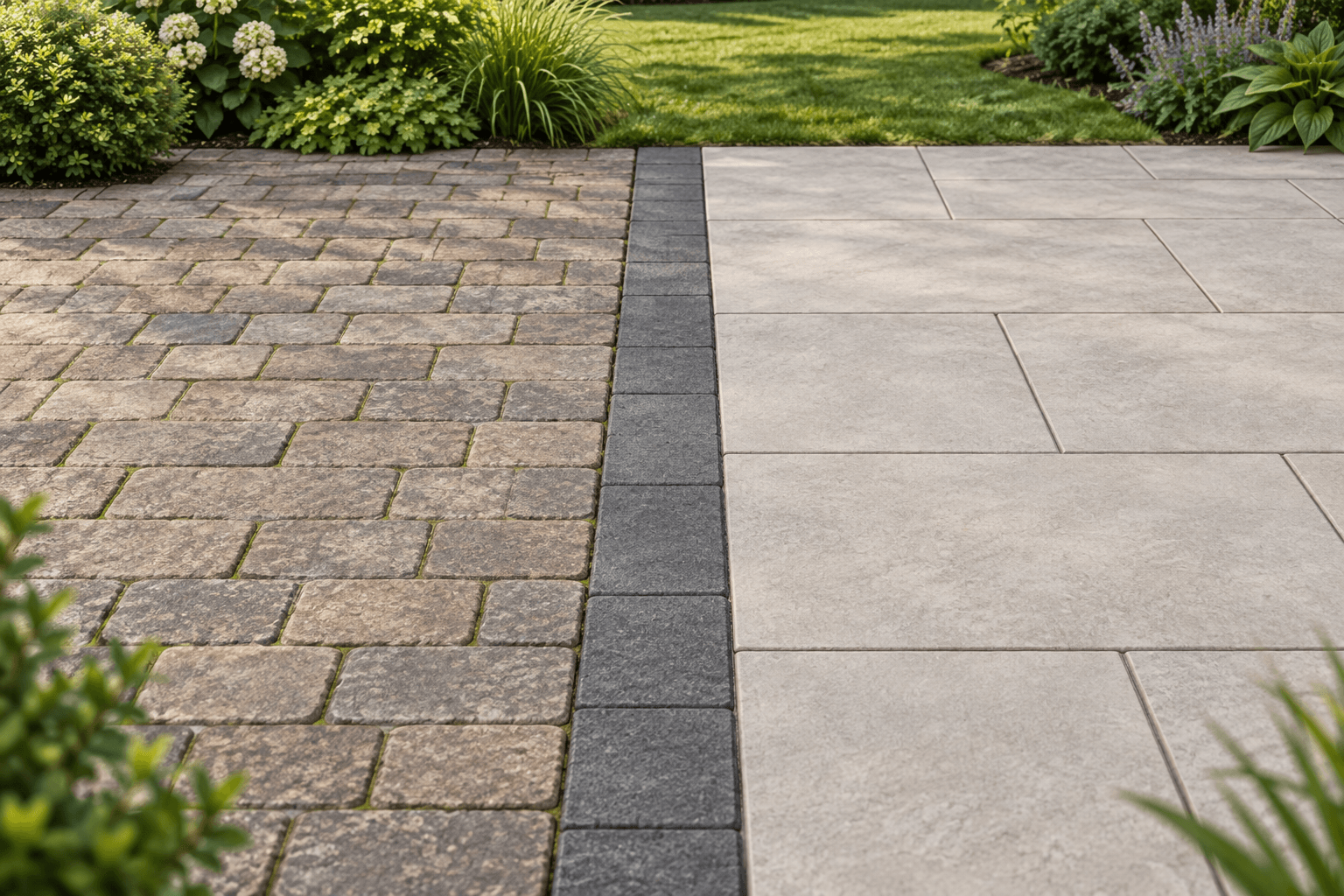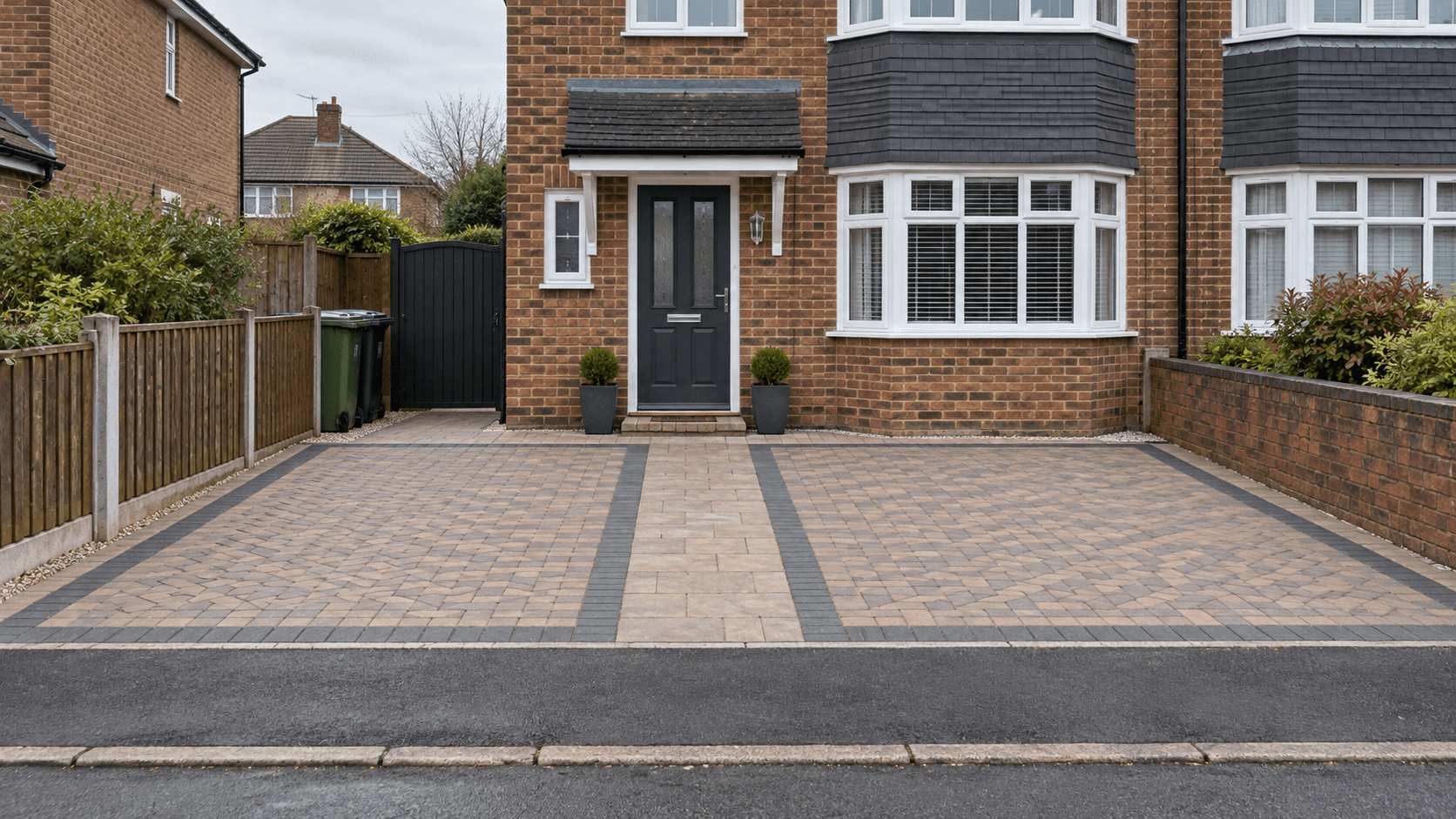
Patio slabs all look convincing on a display stand. The differences that matter show up later: how the surface handles a wet winter, what it looks like after two years of feet and furniture, and how much work it takes to keep it looking like the day it was laid.
M&R Property & Paving Services builds garden patios in Egham and fits all three of the main slab families. This is the comparison we wish every customer had before choosing.
Porcelain: consistent, hard-wearing, fussy underneath
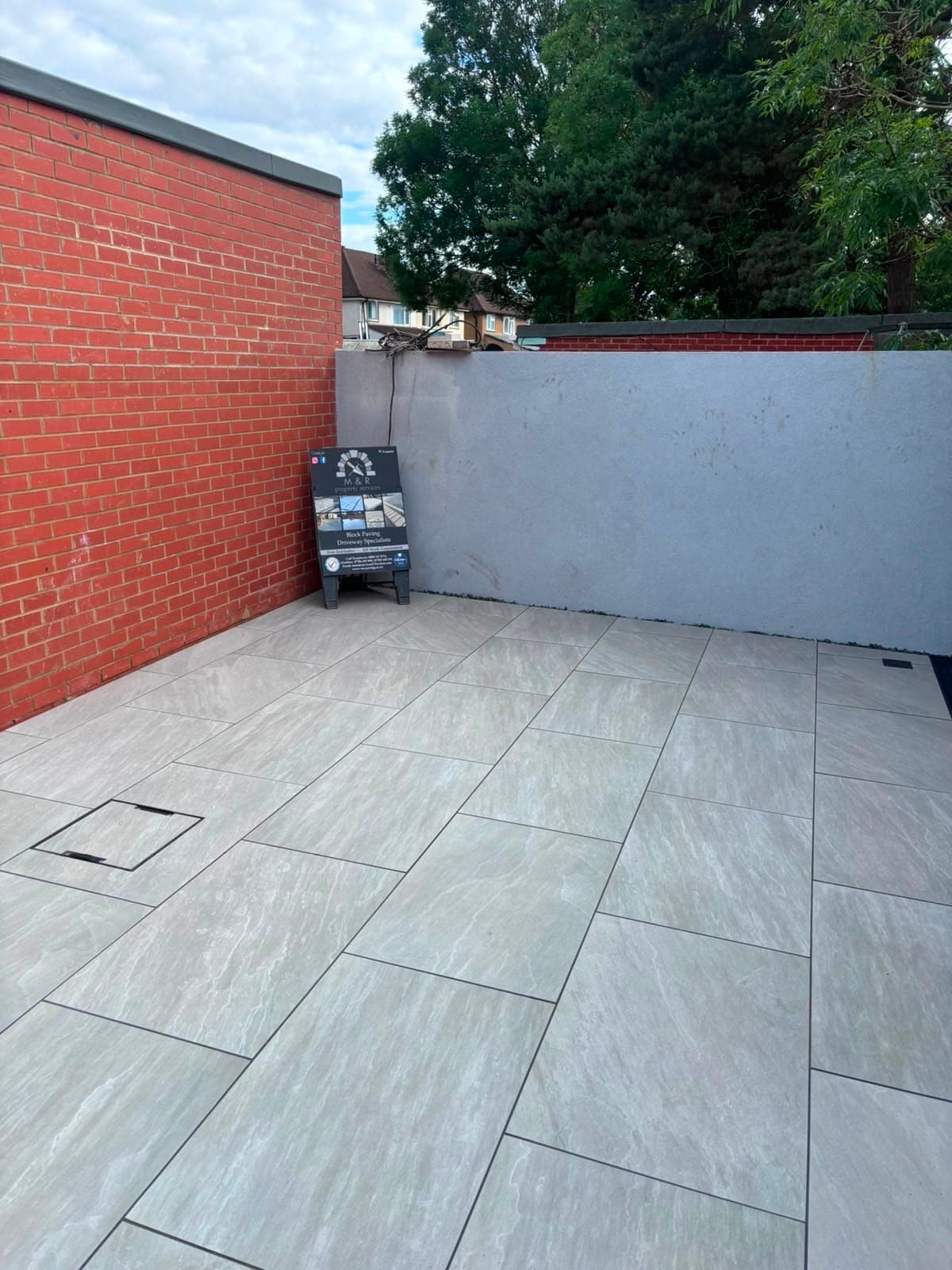
Porcelain is fired to be dense, which is why it barely absorbs water, resists staining and keeps its colour. Moss and algae have little to grip, so a winter's grime tends to rinse off rather than soak in. For a low-maintenance garden patio it is the strongest all-round answer, and textured finishes deal with the slip question sensibly.
The trade-off is underneath. Porcelain is thinner and less forgiving than natural stone, so it wants a full, properly prepared bed rather than dabs of mortar, and it needs a priming slurry to bond. It is also unforgiving of a poor base: any settlement shows as a rocking corner rather than a gentle undulation. The material rewards preparation and punishes shortcuts, which is why two porcelain quotes can describe very different jobs.
- Lowest ongoing maintenance of the three families.
- Needs full-bed laying, priming and a disciplined base.
- Textured ranges answer the wet-slip question.
Natural sandstone: character that changes with the weather
Sandstone gives a patio variation that manufactured products imitate but never quite match: no two slabs repeat, and the colour shifts as it wets and dries. It suits period properties and planted gardens where a uniform surface would look sterile.
It asks more of you in return. Sandstone is porous, so it darkens when wet, can hold algae in shaded corners and benefits from an occasional clean and re-sand of the joints. None of that is a defect; it is the material behaving like stone. A buyer who wants zero upkeep is usually happier with porcelain, and a buyer who wants warmth and variation is usually happier with stone.
- Unmatched natural variation and a softer look.
- Porous: expect seasonal darkening and some upkeep.
- Shaded Egham gardens will need the algae kept after.
Concrete slabs: the budget that still looks right
Modern concrete flags have moved a long way from the grey council slab. Textured and tumbled ranges give a respectable finish at a clearly lower material cost, which matters on a large area where the slab count multiplies every price difference.
Their weaknesses are honest ones: colour sits in the surface rather than through the body, so chips show, and years of sun slowly soften the shade. On a patio that will be furnished, planted around and used rather than photographed, those trade-offs are often perfectly acceptable.
What matters whichever slab you choose
The base decides the lifespan. A patio is a surface on a structure, and the structure is compacted sub-base, correct falls away from the house, and joints that are actually filled. Every slab family fails the same way on a poor base and lasts on a good one, which is why M&R Property & Paving Services prices the base as the main event rather than the small print.
Think about the edges at the same time: how the patio meets the lawn, any step down, and where the water goes. Those junctions are where a patio looks either finished or abandoned, and they cost far less to get right during the build than after it.
Related pages
Questions customers ask
Which patio slab is most slip-resistant when wet?
Textured porcelain and riven natural stone both perform well. Smooth, polished finishes in any material are the ones to avoid around a garden that stays damp in winter.
Why do porcelain patio quotes vary so much?
Because the laying method varies. Full-bed laying with priming slurry on a proper sub-base takes longer and uses more material than spot-bedding, and the difference is invisible on day one and decisive within a few winters.
Do patio joints really need filling?
Yes. Unfilled joints let water wash fines out of the bed, invite weeds and let slabs work loose. Whichever jointing product is used, full joints are part of the build, not a finishing touch.
Choose porcelain for minimum upkeep, sandstone for character you are willing to look after, and modern concrete where budget leads. Then spend whatever you saved on the base, because that is the part doing the work.
M&R Property & Paving Services can bring samples to a garden in Egham, check the levels and drainage, and price the same patio in more than one material so the comparison is real. Start through the contact page.