A fence is the biggest single object in most gardens and the least considered purchase in most projects. It sets the privacy, frames every photograph, takes the full force of the weather, and its failures are sudden, usually in the first proper storm after the posts give up.
M&R Property & Paving Services builds garden fences in Staines as part of wider garden work, and this is the practical guide: which construction suits which boundary, and where the lifespan really comes from.
Closeboard, panels or slatted screens
Closeboard, built board by board on rails between posts, is the strongest everyday choice for a windy boundary: individual boards can be replaced, the height follows sloping ground gracefully, and there is no panel to lift out in a gale. Prefabricated panels are quicker and cheaper to install but live and die as whole units.
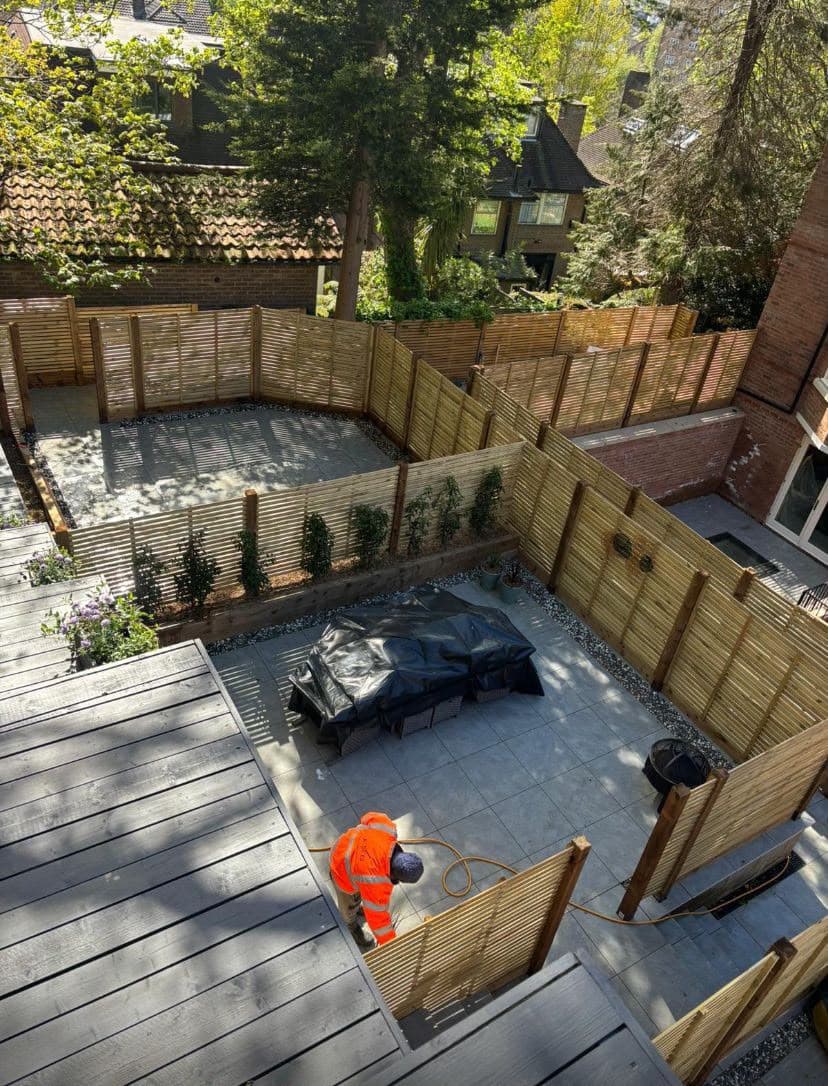
Horizontal slatted screens are the contemporary option: they filter light and wind rather than blocking them, look expensive because the timber is machined, and suit a garden where the fence is part of the design rather than just the edge. Their gaps mean they trade a little absolute privacy for a lot of appearance.
- Closeboard for strength, repairability and sloping ground.
- Panels for speed and budget on sheltered runs.
- Slatted screens where the fence is a design feature.
Posts are the lifespan
Fences do not fail in the middle; they fail at the ground line of the posts. Concrete posts outlast everything and never rot, at the cost of a harder look and more effort to dress with planting. Quality timber posts look better and can last well, but only when they are properly sized, properly set and kept out of standing water.
M&R Property & Paving Services treats the post line as the actual product on a fencing job: generous holes, concrete set with a fall so water sheds away from the timber, and gravel boards under the panels or boards so the fence itself never touches soil. That last detail alone adds years.
- Concrete posts for maximum life, timber for looks.
- Gravel boards keep the fence out of the wet soil.
- Post tops and caps shed the water that starts the rot.
Shared boundaries without the friction
Most fence lines are shared with a neighbour, and most fencing friction is avoidable with one conversation before any work. Agree which side the new fence sits, who sees the rails, what height suits both gardens, and when the work will happen so pots and climbers can be moved.
Where a boundary is genuinely yours to replace, it is still worth the knock on the door. A neighbour warned about a day of noise is a neighbour who does not mind it, and access from both sides always produces a better finish along the bottom edge.
Details that separate tidy from temporary
The difference between a fence that looks crisp at year five and one that looks tired at year two is a handful of small choices: consistent post spacing so panels are not stretched, level tops stepped deliberately on a slope rather than raked awkwardly, capping rails that shed rain, and fixings that will not streak the timber with rust.
Think about the garden side too. If a new patio or path is planned, fix the fence first: barrows and concrete near finished paving is a risk nobody needs, and the fence posts may want concrete at exactly the depth the paving build-up will occupy.
Related pages
Questions customers ask
Which fence lasts longest?
Closeboard on concrete posts with gravel boards is the practical longevity combination. Timber posts can serve well too, but they are the component that decides when the whole fence needs attention.
Can a fence go up before landscaping work?
Ideally yes, fence first, then paving and planting. It avoids machinery near finished surfaces and lets post concrete and paving build-ups be coordinated rather than fought.
What height should a garden privacy fence be?
Most rear-garden privacy runs suit a fence at around head height plus a trellis or slatted top where more screening is wanted. Taller boundary structures can need permission, so anything unusual is worth checking before building.
Choose the construction for the boundary, spend the money at the post line, and have the neighbour conversation early. That is most of what separates a fence that lasts from one that leans.
M&R Property & Paving Services can look at a fence line in Staines, advise between closeboard, panels and screens, and sequence it properly against any paving or garden work planned. Start through the contact page.